

How Municipalities Can Implement Biomining of Legacy Waste in India
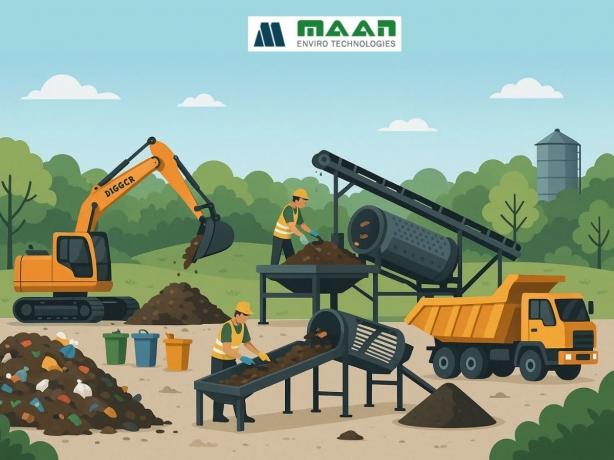
Cities across India are struggling with old dumpsites filled with mixed waste collected over many years. These landfill mounds spread bad odour, release methane, contaminate soil and groundwater, and take up large land areas that could serve public needs. Municipal bodies are now shifting toward biomining of legacy waste, a practical method to reclaim land and improve environmental safety. This guide explains a clear and workable process for municipalities planning a biomining plant for effective legacy waste management in India.

What is Biomining of Legacy Waste?
Biomining is a controlled process used to treat old mixed waste found in large dumpsites by breaking it down and separating it into different useful materials. Machines such as trommel screens, excavators, air density separators and conveyors are used to recover recyclable items, soil-like material and high-calorific fractions like RDF.
The process reduces waste volume, prevents pollution and helps convert long-abandoned landfills into usable land.
Why Biomining is Important for Municipal Bodies
Biomining supports India's goal of cleaner and safer living spaces. It is essential for solving long-term waste issues and reclaiming land that has remained unused for decades.
Key Benefits
-
Reduces landfill size and frees valuable land for development.
-
Controls fires, smoke, leachate and foul smell.
-
Protects groundwater from toxic contamination.
-
Improves recycling and resource recovery.
-
Helps meet CPCB and NGT compliance for waste handling.
-
Reduces the cost of transporting and dumping new waste.
Many cities in states such as Maharashtra, Uttar Pradesh and Madhya Pradesh have reclaimed acres of land through biomining and turned dumping grounds into public assets.
How Municipalities Can Implement Biomining Effectively
Assess the Dumpsite
Analyse waste quantity, composition and available space. Survey reports and drone mapping help in planning the right processing capacity.
Create a Practical Work Plan
Define project duration, manpower, safety measures, material flow, and daily processing targets. Good planning prevents delays.
Select Suitable Equipment
Choosing suitable machinery is critical for efficient waste recovery. Equipment like trommel screens, excavators, shredders, and conveyors must match waste characteristics and required output quality.
For guidance, refer to this helpful resource on Selecting Equipment for Legacy Waste Biomining.
Set Up a Biomining Plant Near the Dumpsite
A processing zone close to the landfill reduces transport cost and improves efficiency. Composting and RDF handling areas should be clearly defined.
Manage Recovered Materials Responsibly
Soil-like material can be reused in landscaping or site levelling. RDF can be supplied to cement plants. Recyclables such as plastics, metals, rubber and glass should be sent to authorised recyclers. Remaining inert materials need safe disposal.
Monitor and Record Progress
Track moisture content, daily output, dust control, worker safety and community feedback. Transparent records help maintain trust.
Common Mistakes and Useful Expert Tips
Common Mistakes
-
Starting operations without proper site assessment.
-
Selecting machines only based on low cost instead of performance.
-
Poor control of moisture levels and dust.
-
No plan for handling recovered materials.
Expert Tips
-
Conduct pilot tests before full-scale biomining.
-
Use flexible equipment that can handle mixed waste.
-
Maintain consistent supervision and log sheets.
-
Engage local communities to reduce complaints and build support.
Experience across multiple projects shows that disciplined monitoring and daily reporting make a significant difference in outcomes.
FAQs
What makes biomining better than traditional landfill methods?
Traditional landfilling only piles waste and increases pollution. Biomining scientifically processes old waste and recovers usable materials while freeing land safely. It reduces foul smell, fire risk, and groundwater contamination.
How much land can be recovered through biomining?
It depends on the waste volume and site conditions. Many cities in India have reclaimed several acres of valuable land after completing biomining of legacy waste dumps that were decades old.
Is biomining suitable for small municipalities or only large cities?
Both can adopt it. Smaller municipalities can use compact machinery and phased planning, while large cities may use high-capacity processing lines to handle huge waste volumes faster.
What materials are recovered after processing legacy waste?
Screened material is divided into RDF, soil-like compost fines, metals, plastic recyclables, and inert materials like stones and bricks. Many of these items go back into useful recycling streams.
How long does it take to complete a biomining project?
Time depends on dump height, waste type, weather conditions, and machine capacity. Smaller dumpsites can be cleared within months, while large legacy waste sites may take a few years with continuous processing.
What technology is used in biomining plants?
Mechanical screening systems like trommel machines, air density separators, and crushers are used along with biological treatment for moisture and microbial activity. Correct equipment selection is essential for efficient results.
Summary
Biomining gives Indian municipalities a real opportunity to tackle old waste dumps, recover valuable land and reduce the environmental burden of landfills. The success of biomining of legacy waste depends on planning, choosing suitable machinery, skilled operation, and responsible material management. With the right approach, a biomining plant can turn decades-old landfill sites into cleaner and useful spaces and support long-term progress in legacy waste management across India.